
Brazoria County Sex Offender Checks
The Texas Public Sex Offender Registry is the primary public channel. It supports person and geographic searches. Filter by Brazoria County, a local city, ZIP code, or address when those fields fit the question. The official profile identifies the registering agency, which is the right office for address or compliance concerns.
The registry is not a list of every person arrested for or accused of a sex offense. Public inclusion follows Texas Chapter 62 registration law. Court case records answer what happened in a prosecution, while the registry answers whether a person currently appears under public registration duties.
Brazoria Boundaries Set Authority
Registration is ordinarily handled by the local law-enforcement authority for the person's residence. A city police department may register an address inside a municipality. The Brazoria County Sheriff may handle an address outside municipal limits. Pearland's boundaries also cross Brazoria, Fort Bend, and Harris Counties, so a city name alone does not establish the right county office.
Open the full official profile and read the named registering agency. For appointment details, address updates, or hours, call that agency through its official directory. The county jail information line serves custody questions and should not be treated as the registration office.
Texas Public Sex Offender Registry Searches
DPS maintains the statewide search. A name search works best when more than one non-sensitive identifier can distinguish similar results. A geographic search supports neighborhood awareness without assuming a name.
- Open the Texas DPS registry and accept its conditions of use.
- Choose a person or geographic search, then enter a name, address, city, ZIP code, or Brazoria County filter as appropriate.
- Review the result list or map and compare profile identifiers carefully. Do not infer identity from a name alone.
- Open the complete profile and read the address, offense, status, verification details, and registering agency.
| Field Label | Type | Required | Notes |
|---|---|---|---|
| Last Name / First Name | Text | Search-mode dependent | Used for person search |
| Address | Text | Geography mode | Street or location input |
| City | Text or dropdown | No | Use a Brazoria municipality |
| ZIP Code | Text | No | Five-digit area filter |
| County | Dropdown | No | Select Brazoria |
| Radius | Dropdown | Address mode | Use the current options shown live |
The DPS search interface is shown in the successful project image without displaying an individual's profile.
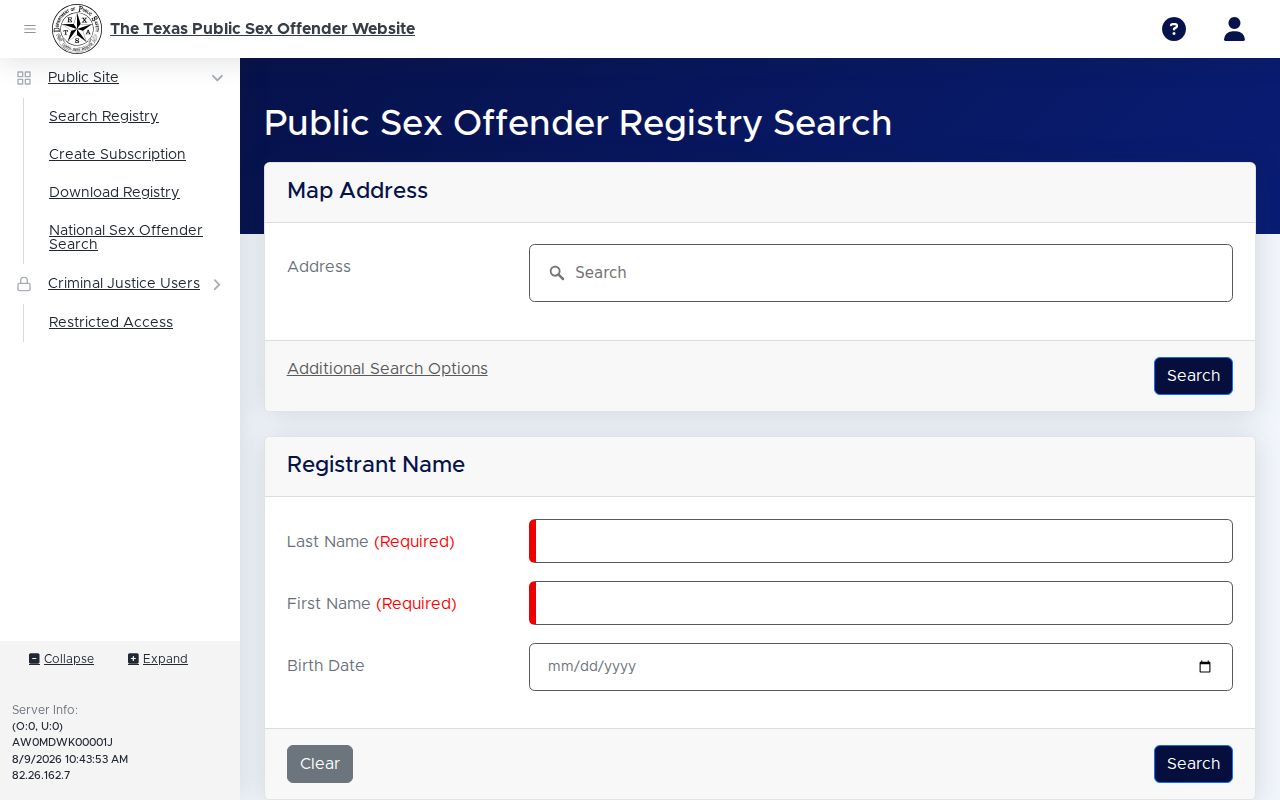
The form illustrates why person and geographic queries answer different safety questions. Always rely on the live controls because portal options can change.
When a Brazoria Address Seems Stale
Registry data can change. A move, verification cycle, processing delay, or apparent noncompliance can make an address look uncertain. Do not visit the location, question neighbors, or confront the registrant. Use the managing agency named on the profile.
Report an apparent compliance issue to that registering police department, the Brazoria County Sheriff when it is the named authority, or DPS. Give the public profile reference and explain the concern without conducting a private investigation. Law enforcement decides whether the facts require follow-up.
Verify through the custodian. A map point is a published record location, not a guarantee that a person is present at that moment.
Registry Profiles: What They Show
The Texas DPS registry profile interface shows how public fields are grouped in the official system.
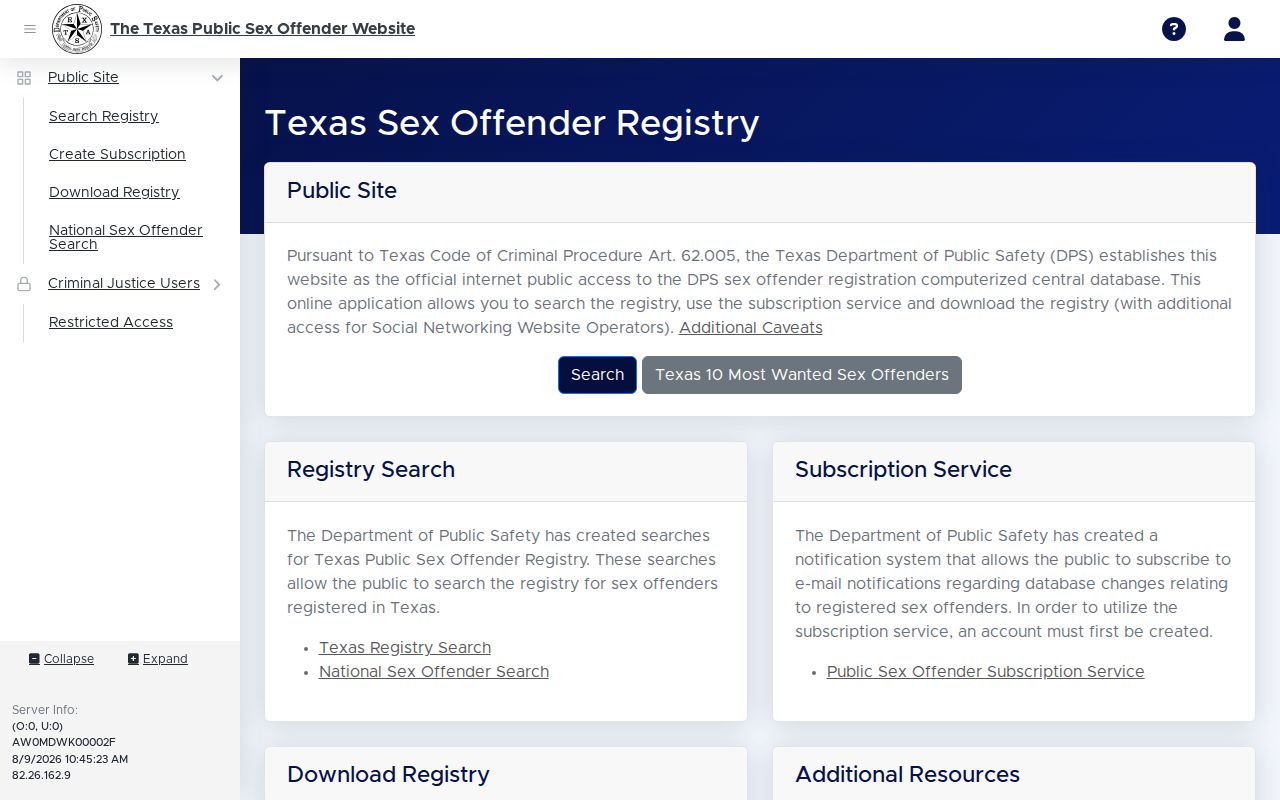
A public Texas profile combines identification, residence, offense, and registration information. The layout makes clear why the full record must be read instead of relying on the photograph or map marker.
| Name & Aliases | The registration name and reported aliases used to distinguish identities. |
|---|---|
| Photo & Description | A current photograph and public physical traits, which may include scars, marks, or tattoos. |
| Registered Address | The public residence or location information and related verification data. |
| Offense & Statute | The reportable offense, conviction jurisdiction and date, and statutory reference. |
| Registration Basis | Risk or registration status under Texas law, not a simple universal consumer tier. |
| Registration Status | Compliance, verification, registering agency, or other status fields released by DPS. |
Vehicle, school, or occupational fields can appear when Texas law makes them public. Social security numbers, driver-license numbers, personal phone numbers, and protected victim identifiers are not public registry search data.
Fields Texas Keeps Nonpublic
Public safety does not require release of every item in an agency file. Sensitive government identifiers, phone data, and protected victim information remain outside the public profile. Some victim age or sex categories may appear only when statute permits them, without identifying the victim.
A blank field should not be filled with guesses from social media or commercial sites. Treat the DPS profile and the registering agency as the official sources. If a record appears to identify the wrong person, compare the public identifiers and contact DPS rather than broadcasting the concern.
Registration Levels and Duties in Texas
Texas does not reduce its system to a universal public Level 1, 2, or 3 label. Code of Criminal Procedure Chapter 62 ties registration to the reportable conviction or adjudication, the offense, repeat status, and offense-specific rules. Use the current statutory offense table, not a federal tier chart, to understand duration.
| Texas framework | Duration | Verification |
|---|---|---|
| Listed lifetime categories | Lifetime, as Chapter 62 specifies | At the frequency assigned by statute and the registering authority |
| Other general adult period | Commonly 10 years after release, supervision discharge, or court dismissal, whichever is later | As required for the specific registration basis |
| Juvenile or early-termination provisions | Case-specific | Requires separate review of the governing order and law |
Ten years and lifetime are not informal risk scores. They are duty periods tied to law. A court order, adjudication type, or repeat offense can affect the result, so the actual profile and current statute control.
NSOPW Beyond Brazoria County
The National Sex Offender Public Website adds a cross-state search layer.
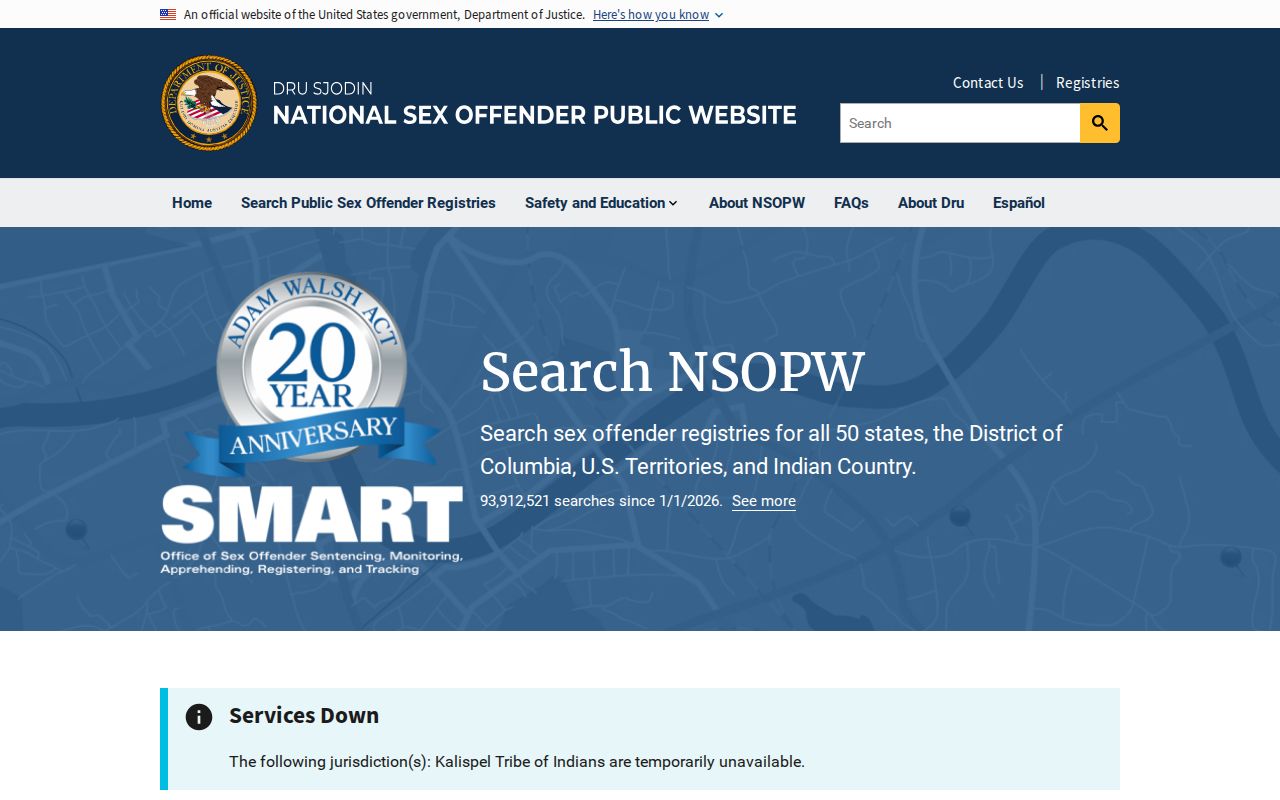
The national interface is useful when a person may have moved or when an address lies beyond Texas. NSOPW depends on data supplied by participating jurisdictions, so it does not replace the Texas profile or local verification.
Use DPS for the detailed Texas record and the registering agency for a local concern. Use NSOPW to broaden the geography. Differences between results can reflect source timing and state disclosure rules rather than proof that one record is false.
Using Registry Information Lawfully
Registry information supports awareness and reasonable safety planning. It does not authorize harassment, threats, intimidation, trespass, vigilantism, or discrimination. A profile also does not show a person's location at every moment. Direct urgent safety threats to 911 and non-urgent compliance questions to the listed agency.
Community notification follows Texas law and local agency practice. Keep the information in context, confirm changes with the custodian, and do not republish sensitive claims beyond what the official record states.
Misuse is prohibited: Texas DPS warns that registry information may not be used to injure, harass, or commit a crime against a registrant or household. Misuse may lead to criminal penalties or civil liability.
Brazoria Address Rules Vary
No single statewide school-distance statement resolves every Brazoria County address. Residence limits can arise from supervision conditions, court orders, and valid local rules. Registration duties and residence restrictions are related but distinct questions.
Do not draw a distance circle on the public map and assume it decides legality. Confirm the actual municipal boundary, the person's legal status, and the controlling order or ordinance through the proper agency. The registry reports public data; it is not a zoning or legal-opinion tool.
A city address may also sit close to a boundary or use a postal city name that differs from its governing jurisdiction. Start with the profile's registering authority, then verify the physical jurisdiction through official city or county sources. If a supervision condition is involved, the signed court order and supervising office control the individual's duties. Public map tools cannot resolve those case-specific terms.
Search dates are useful when safety planning depends on the result. A later check may reflect a move, new photo, status update, or agency reassignment. Save the official profile reference rather than copying a map image without context. For a concern tied to a school, park, or child-care location, ask the proper government office which current rule and boundary apply.
Confirm a Brazoria Registry Match
A shared name is not enough to identify a person. Compare the official photograph, age or birth-date field, physical description, aliases, and other public identifiers. Then read the offense jurisdiction, conviction date, address, registration status, and managing agency. Do not use an unrelated record to fill a blank registry field.
Save the date of the search. Entries can change after a move, verification, new photograph, or agency update. When the address or status matters for immediate planning, contact the registering authority shown on the profile. Ask that agency to verify its own public record rather than asking a neighbor or approaching the listed location.
The Texas registry, local law-enforcement file, and NSOPW have distinct roles. DPS publishes the official statewide profile. The named police department or Sheriff handles local registration and compliance. NSOPW broadens the search across participating jurisdictions. Reading these roles correctly prevents a national result from being mistaken for a current local verification.