
Arrest Records in Brazoria County
One arrest can create four distinct trails. The arresting officer writes an incident or arrest report. The jail makes a booking record. A magistrate records warnings and a bond decision. If prosecutors accept a charge, a clerk opens a criminal case. Fingerprints may also connect the event to the Texas Department of Public Safety repository.
Choose the custodian by the question. Current county custody belongs with the Brazoria County Jail. The incident narrative belongs with the Sheriff or city police department that made the arrest. A filed charge and final outcome belong with the court. Statewide public conviction and deferred information comes from DPS, while a person seeking an identity-complete review of their own Texas record should use the DPS fingerprint process through FAST and IdentoGO.
Four Trails From One Arrest
The records appear in sequence, and the wording can change along the way. An officer records the alleged offense and legal basis for arrest. Jail staff establish identity, inventory property, take photographs and fingerprints, check holds, screen for medical and security needs, and record the booked charges. A magistrate then gives Article 15.17 warnings and addresses bail. Prosecutors may reject, alter, enhance, or file the allegation.
Arrest report → jail booking → magistrate and bond record → prosecutor and court cause
A gap between systems may reflect timing rather than error. A very recent booking might not yet have a cause number. A court case can remain after the person leaves jail. A later dismissal changes the court result but does not erase the booking by itself.
Brazoria County Arrest Lookups
The county's Judicial Records Search exposes separate Jail Records and Criminal Records choices. Use both when tracing a recent event, and use direct channels when an online entry is missing.
- Identify the arresting agency and the approximate date and place.
- Select Jail Records for current or recent county booking information. Call 979-864-2240 when the entry is absent or unclear.
- Select Criminal Records to see whether prosecutors filed a cause. Allow for intake and filing delay.
- Request the incident or arrest report from the Sheriff, city police department, constable, campus agency, or DPS unit that created it.
- Follow the court cause for the final disposition. Use DPS for eligible statewide public history or fingerprint self-review.
Visit or phone the correct custodian when the portal does not answer the question. A public-information request should name the agency, incident number if known, date and location, record type, and preferred electronic format. Do not ask the county to create a new report or answer open-ended questions.
Reports Stay With Arresting Agencies
Brazoria County has no single pool of every city police report. Sheriff-created reports go through the Sheriff's official public-information route. Pearland, Alvin, and Lake Jackson reports stay with their police records channels. Constable records go to the relevant precinct. Later county booking and court entries may still appear in county systems.
| Arresting agency | Record route |
|---|---|
| Brazoria County Sheriff | Sheriff records request; jail portal or 979-864-2240 for custody |
| Pearland Police | Pearland police records and P2C channels |
| Alvin Police | Alvin Police Records at 281-585-7120 |
| Lake Jackson Police | Lake Jackson police records request channel |
| Constables | The relevant precinct public-information route |
| DPS or campus police | The agency that made the arrest; county jail for a resulting booking |
The general county TPIA route is piarequest@brazoriacountytx.gov or the Criminal District Attorney's Civil Division, 237 East Locust Street, Suite 305, Angleton, TX 77515. Judicial case files bypass that inbox and go to the court clerk.
Arrest Records: What They Contain
An incident report and booking profile overlap, but they serve different jobs. Released details depend on the record, case stage, and Texas confidentiality rules. Government Code Section 552.108 may restrict investigative material when release would interfere with an active matter. Juvenile, protected victim, medical, social security, and driver-license data can also be withheld.
| Incident details | Report number, date, time, location, agency, officer, and alleged legal basis. |
|---|---|
| Alleged offense | The offense and statute cited at arrest, subject to later review or change. |
| Booking details | Booking number and time, fingerprints, photo, charges, holds, and custody status where public. |
| Bond | Amount and type by charge when ordered and released. |
| Cross-references | Warrant or cause numbers that connect the arrest to other records. |
| Release or transfer | Status information when the official public entry provides it. |
Do not assume that a public profile contains a mugshot, exact housing unit, magistrate time, or release date unless the live record displays it. Security and medical details are not public search fields.
Booking Charge or Filed Charge
A booking charge records the allegation presented to the jail. The prosecutor's filed information or indictment states what entered court. Those labels can differ. A charge may be rejected, reduced, enhanced, joined with another count, or dismissed. Read the Brazoria County court case lookup before treating the intake language as the lasting charge.
Read the outcome, not just the arrest. Match the booking to the cause number, then obtain the judgment or dismissal order when the disposition matters.
Bond also does not state guilt. Cash, surety, personal-recognizance, and no-bond statuses depend on law and judicial order. Release may follow bond, dismissal, time served, or transfer.
Recent Brazoria County Bookings
For the newest county arrest, begin with Jail Records and the jail information line, 979-864-2240. Search by name and use a booking identifier if the live portal offers that field. Confirm spelling carefully. Public search controls can change, and the county does not promise a fixed refresh schedule.
A current-custody list is not a lifetime arrest index. Entries may change or roll off after release or transfer. Absence from the current jail search proves neither that no arrest occurred nor that a past booking was cleared. Use the arresting agency and court cause to build the rest of the trail.
Note: The Sheriff mobile app advertises tips, navigation, alerts, and news, but no official app-only inmate search was verified.
When Custody Moves Elsewhere
A person may leave the Brazoria County Jail through release or transfer. After a state prison transfer, use the TDCJ Inmate Search.
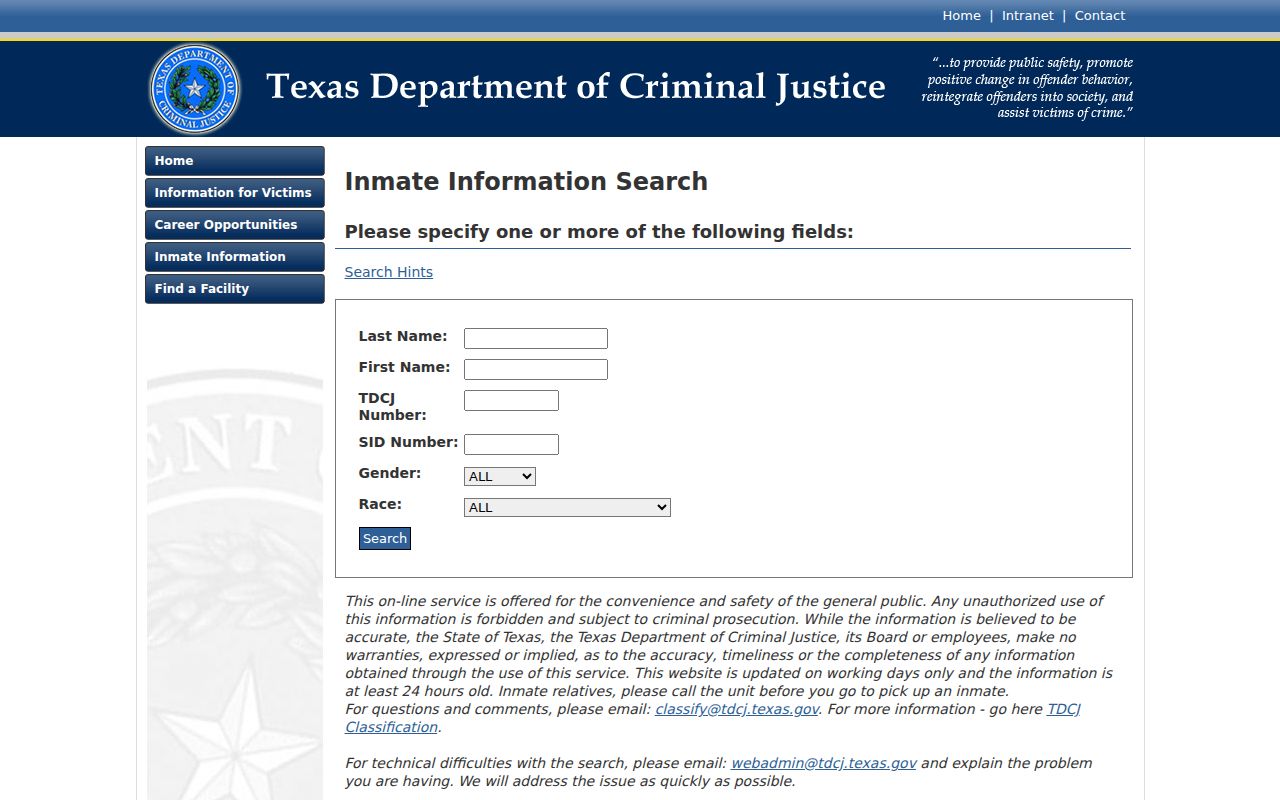
The TDCJ form is a sentenced-prisoner search, not a replacement for the Brazoria County booking record. The official Texas VINELink service provides another custody-status and notification channel.
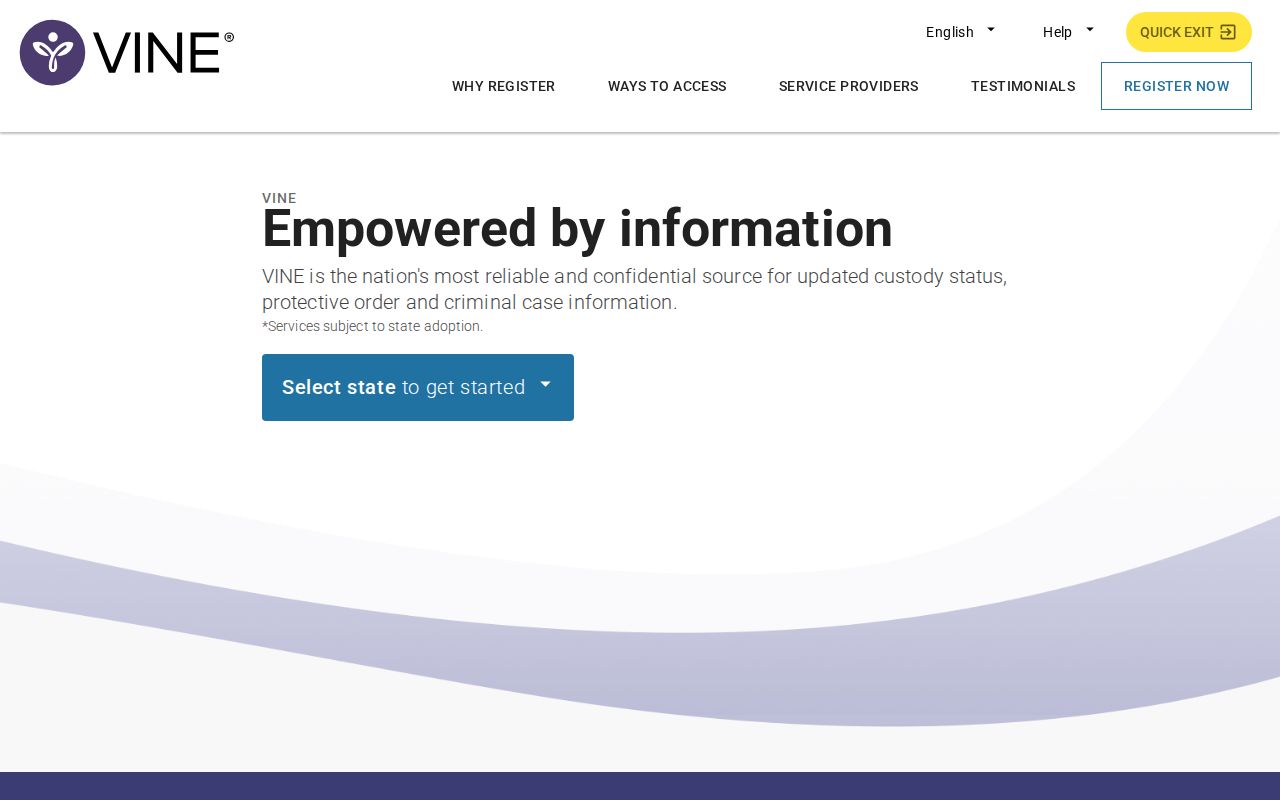
VINELink may help follow a transfer or status change, but it does not create or replace the county record. Federal custody uses the Bureau of Prisons locator.
Pearland also operates a 24-hour city jail and exposes an Inmate Inquiry through its P2C system. A detainee may be released there or transferred. Because Pearland crosses three counties, confirm the receiving jail rather than assuming the transfer went to Brazoria County. Alvin has a separate jail personnel line at 281-585-7130 but no official public blotter was verified.
Arrest Records vs Conviction Records
The arrest record shows that authorities took a person into custody or documented an arrest event. A conviction record reflects a court finding or plea resulting in guilt. The two records come from different custodians and can end differently.
| Arrest Record | Conviction Record |
|---|---|
| Created by an arresting agency and jail | Created by a court and reported to DPS |
| Shows an allegation and booking | Shows a finding of guilt and sentence |
| Held in agency and booking systems | Held by the clerk and state repository |
| May end in release, rejection, dismissal, or acquittal | May lead to sentence, appeal, or later relief |
Note: An arrest is not proof of guilt, and many bookings never become filed cases or convictions.
Dismissed but Still Booked
A dismissal does not automatically delete an arrest photo, booking entry, or DPS cycle. Texas Chapter 55A now governs expunction. Eligibility depends on the precise charge, disposition, waiting period, and other statutory facts. An order of nondisclosure is a different remedy with different effects.
Keep the dismissal order and obtain a certified court disposition. Review your own DPS identity record through the official fingerprint route if the state history appears wrong or incomplete. Correction and expunction are separate tasks: correction fixes inaccurate data, while expunction requires a court order when the law permits it.
Compare identifiers before seeking a correction. A common-name result can belong to someone else, while a missing disposition may mean the court's final action has not reached the repository. Start with the Brazoria clerk's certified order, then use the official DPS review and correction instructions. Do not send fingerprints, a social security number, or a driver-license number through an ordinary county email request.
Record the date each official source was checked. A booking can post before prosecutors decide whether to file, and a court disposition can appear before the state repository receives its update. When two official records conflict, ask the custodian of the disputed field to review it. Do not assume that the newest web page contains the most complete file.
Brazoria Arrest Access Fallbacks
Online search is only one route. The jail information line can address county custody when a public entry is missing or unclear. The Sheriff's detention information is the current source for visitation, inmate mail, deposit, and phone rules. Vendor contracts can change, so an old third-party instruction may be wrong.
For a Sheriff-created report, use the official request channel. State the incident number, date and time range, place, record type, and delivery preference. City police reports go to the city that created them. Court pleadings and dispositions go to the clerk even when they refer to the same arrest.
Phone and counter staff need enough detail to find the right record, but ordinary email should not carry sensitive identity data. Ask what the official form requires. If an investigation remains active, released basic arrest information may be much narrower than the full report. Redaction or withholding does not establish guilt, and it does not prove the event did not occur.